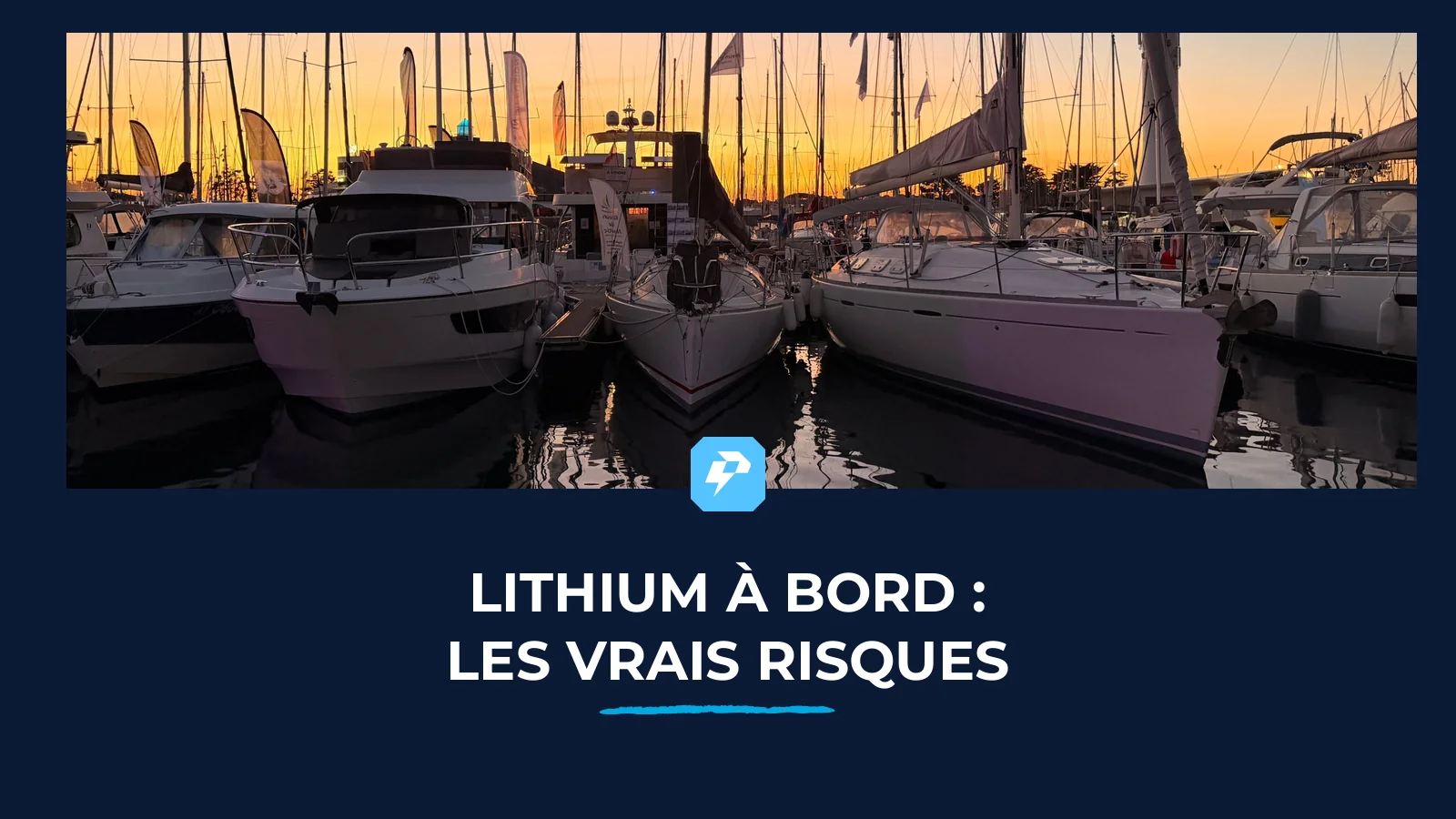
A lithium battery on a boat is not inherently dangerous: a quality LiFePO4 battery, properly installed and protected by a BMS, is reliable equipment. The main risk is thermal runaway, most often triggered by overcharging, charging in cold weather, impact, non-compliant installation, or low-grade cells. Here are the five real risks, how to manage them, and why Yacht Power offers an alternative solution, without lithium batteries.
The Essentials in 30 Seconds
- Not all lithium batteries are equal: LiFePO4, the most common on board, is also the most stable.
- Incidents mainly stem from poor installation, unsuitable charging, or low-quality cells.
- A lithium fire is rare, but difficult to extinguish: prevention is essential.
- An alternative without lithium batteries now exists: Super Carbon graphene technology supercapacitors.
Table of Contents
Boat Lithium Battery: What Are We Really Talking About?
We say ‘lithium battery’, but there are several types. And they don’t behave in the same way at all.
On boats, the vast majority of house battery banks use LiFePO4, or lithium iron phosphate. This is the most thermally stable type. In contrast, the batteries in our phones, computers, drones, or scooters use other chemistries, which are denser but more sensitive to heat.
In other words, a marine LiFePO4 battery has nothing in common with a scooter battery left charging in the saloon. Yet, both are often lumped together when discussing the ‘danger of lithium’.
The 5 Real Risks of a Lithium Battery On Board
1. Overcharging or a Faulty BMS
The BMS is the brain of the lithium battery. It monitors each cell and cuts off the battery in case of overcharging, excessive discharge, or overheating. Thus, an absent, undersized, or poorly configured BMS opens the door to incidents.
2. Charging in Cold Weather
A lithium battery should not be recharged below 0 °C, unless it is equipped with a heating system designed for this. Below this temperature, metallic lithium deposits on the electrodes. As a result, the battery degrades and weakens, without this being visible externally.
3. Impacts, Humidity, and Salt
A crushed or punctured cell can lead to thermal runaway. However, on a boat, movement, vibrations, and salty air put equipment to the test. This is why mounting and location are as important as the battery itself.
4. Non-Compliant Installation
This is the most frequent cause. Undersized cables, missing fuses, unsuitable charger or alternator, mixing with lead-acid batteries without protection… Indeed, a lithium battery accepts very high charging currents: a classic alternator can overheat if it is not protected by a regulator or a DC-DC charger.
5. Low-Grade Cells
Finally, not all batteries sold as ‘marine lithium’ are equal. Cells of unknown origin, approximate assembly, or a cheap BMS are enough to undermine the qualities of LiFePO4.
Why a Lithium Battery Fire is So Feared
The phenomenon is called thermal runaway. A cell heats up, its heat triggers an internal reaction that produces even more heat, and the neighbouring cell follows suit. Furthermore, the fire releases toxic and flammable gases.
Such a fire is difficult to extinguish, and it can reignite after appearing to be under control. The insurer Helvetia has detailed the case of a yacht destroyed by a faulty lithium-ion battery while charging.
However, let’s keep things in proportion: these incidents remain rare. A quality installation significantly reduces the risk.
Boat Lithium Battery: How to Manage the Risks
If you switch to lithium, here are the basic rules:
- choose a marine LiFePO4 battery from a recognised brand, with a BMS capable of cutting off charging and discharging;
- entrust the installation to a professional who is familiar with ISO/TS 23625, dedicated to lithium-ion batteries for small pleasure craft;
- protect the alternator with a suitable regulator or a DC-DC charger;
- install fuses and battery isolator as close as possible to the battery;
- place the battery bank in a dry, ventilated area, away from heat sources;
- inform your insurer before the work.
Le Figaro Nautisme published a comprehensive report on what you need to know before installing LiFePO4 batteries on board. It reminds us that a well-designed and well-installed LiFePO4 is no more dangerous than an old lead-acid installation.
What if we did without a lithium battery on board?
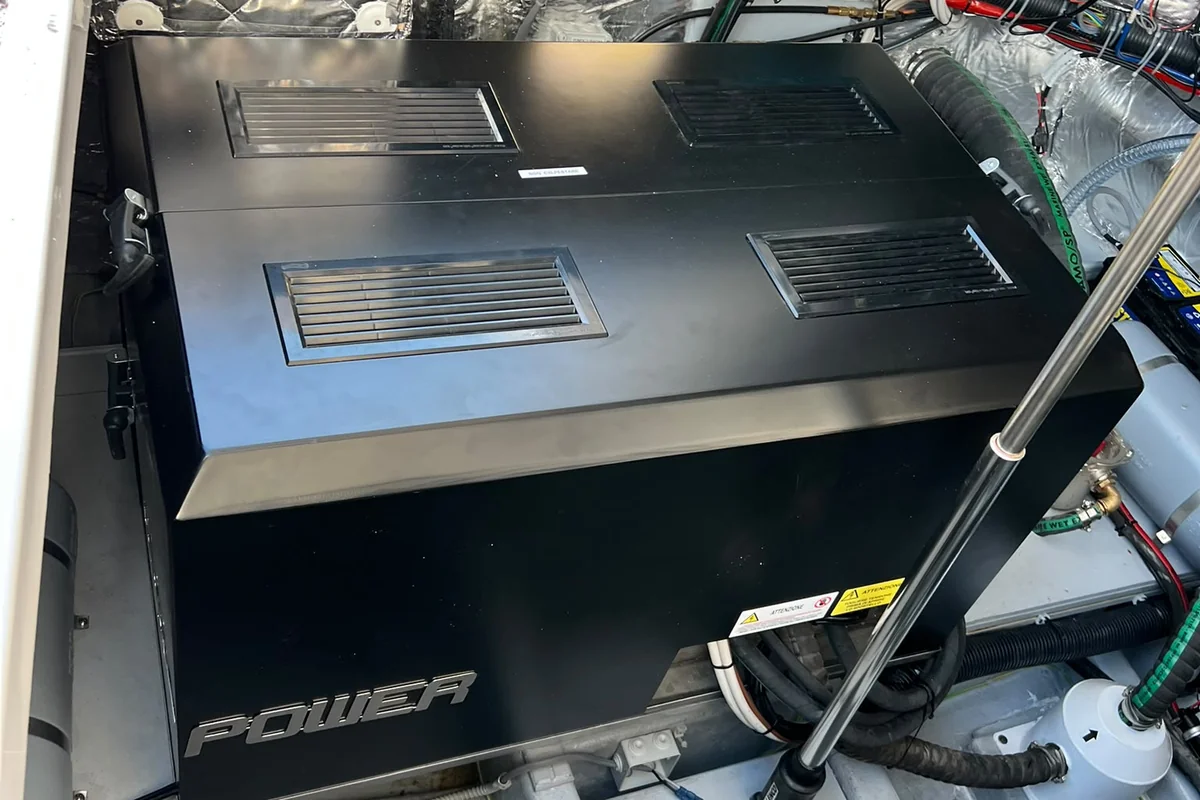
This is Yacht Power’s approach. With its Super Carbon graphene technology supercapacitors, there’s no longer any need for a lithium battery for the house battery bank.
- No metallic lithium or liquid electrolyte: no thermal runaway to fear, according to the manufacturer.
- Operation from -20 °C to +60 °C, including for recharging: no special precautions needed in cold weather.
- 100% usable capacity, with no deep discharge to monitor.
- 20,000 guaranteed cycles, 100,000 nominal cycles.
- No battery bank replacement anticipated, whereas a lithium bank often needs replacing around the seventh year.
To be comprehensive: small traditional 12 V or 24 V batteries remain on board as a buffer, for engine starting, the windlass, or the thruster. The Yacht Power storage system keeps them permanently charged.
Discover the Yacht Power range and our comparison with lithium.
Expert Advice
Before changing your battery bank, call your insurer. Ask them what they require for a lithium installation, and what they think of a non-lithium alternative. Their answer will weigh on your choice.
Frequently Asked Questions
Can a LiFePO4 battery catch fire on a boat?
It’s rare, but possible. LiFePO4 is the most thermally stable lithium battery, but overcharging, impact, charging below 0 °C, or a non-compliant installation can cause thermal runaway. A professional installation with a BMS significantly reduces this risk.
Does my insurance cover a lithium installation on board?
That depends on your contract and your insurer. Some require installation by a professional or a certificate of conformity. Always declare any change to the battery bank before work commences.
Can a lithium bank be replaced by Yacht Power?
That depends on your contract and your insurer. Some require installation by a professional or a certificate of conformity. Always declare any change to the battery bank before work commences.
In Summary
Lithium is not a threat on board, provided it is chosen and installed with care. But if you prefer not to worry about it, Yacht Power offers you another solution, without lithium batteries ⚡
Want to know what it would be like on your boat? Request your personalised study, we’ll take the time to explain it to you.
Also read: Supercapacitor: What is it, and why is it coming to boats?
contact@yachtpower.fr · 06 15 78 06 77